Want to be in the loop?
subscribe to
our notification
Business News
FOREIGN-INVESTED INDUSTRIAL ZONES THRIVING IN VIETNAM
The Long Duc IZ in Dong Nai province is considered a typical example of success in terms of both development strategy and business performance. The IZ, covering an area of 280 hectares, has an occupancy rate of 60 percent with total investment capital of over $800 million.
Atsushi Uehara, Long Duc IZ’s general director, said the IZ attracts investments under what he described as the “flock of fowls” mode. A large group, or a mother hen, after setting up its production base in the IZ, will lead chicks, the companies which make parts and components, to the same IZ to optimize their production and business.
Vie-Pan Techno Park in Hiep Phuoc IZ in HCM City, which became operational last December, has also been mentioned by analysts as a typical success story.
Its investor, a joint venture between Vie-Pan Industrial Park, a subsidiary of Japanese Unika Holdings Company, and Hiep Phuoc IZ Development JSC, aims to develop a specialized IZ for large IZs and high-tech enterprises.
Analysts said the specialized IZ model has been developed by a joint venture based on Forval’s survey.
Forval’s managing director Hideo Okubo said 97.3 percent of Japanese enterprises have not made outward investments, and they are mostly small- and medium-sized enterprises.
The enterprises find Vie-Pan Techno an ideal place to set up their production workshops.
They need to show necessary documents to the IZ’s management board which will take responsibility for administrative procedures.
The story of Amata, an IZ accommodating 125 operational enterprises and an occupancy rate of 99 percent, also shows how foreign investors think big when developing IZs in Vietnam.
Huynh Ngoc Phien, Amata Vietnam JSC’s CEO, said the government has agreed on a plan to develop Amata Express City, a general industrial and urban area complex, in Dong Nai province.
This mammoth project would have estimated total investment capital of $20 billion.
When asked to comment about the great success of foreign-invested IZs, Hideo Okubo from Foval said the key was in the long-term vision, which Vietnamese investors do not have.
IZs, as defined in the NSI (national innovation system), must provide sufficient infrastructure conditions for industrial development, and they are not simply places that provide land to investors to set up factories.
Meanwhile, Vietnamese-owned IZs either have a low occupancy rate or operate ineffectively despite high occupancy rates.
Source: Business Times
Related News
MEMBER CORNER / PROMOTIONS
KNIC EXCLUSIVE GATHERING & NETWORKING 2026: A NEW MEETING POINT FOR INDUSTRIAL INVESTMENT IN HANOI
On October 2, 2026, KN Industrial City (KNIC) will host KNIC Exclusive Gathering & Networking 2026 at the National Innovation Center (NIC) in Hanoi. Building on a series of business networking and investment promotion activities in Ho Chi Minh City and Dong Nai, the event marks a new opportunity for KNIC to connect with businesses, investors, and partners in Northern Vietnam.
MEMBER CORNER / PROMOTIONS
KNIC ENGAGES WITH GOVERNMENT AND HIGH-TECH BUSINESS COMMUNITIES IN CHINA
From Beijing to Shandong, KN Holdings and KN Industrial City are continuing to expand their engagement with government authorities, trade promotion organizations, and high-tech business communities in China. In Beijing, the delegation met with the Center for International Economic and Technological Cooperation under the Ministry of Industry and Information Technology (MIIT), exchanging perspectives on industrial and technology cooperation between the two markets.
VIETNAM ECONOMY INVESTMENT
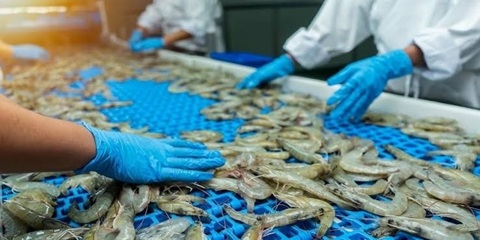
VIETNAM’S TRADE TOPS $825 BILLION BY MID-SEPTEMBER
Figures released on September 21 showed goods trade reached nearly $55 billion in the first 15 days of September alone, bringing cumulative turnover since the beginning of the year to more than $825 billion. The strong growth reflects robust trade flows, with demand for consumer goods and production inputs remaining high.

TECHNOLOGY
VIỆT NAM'S BUSINESSES MOVE TOWARDS AI AGENTS
Việt Nam’s AI landscape is entering a new phase as businesses move beyond generative AI (GenAI) tools designed to assist human users towards autonomous AI, agentic AI and AI agents that can take action with limited supervision, experts have said. The shift comes as Việt Nam seeks to accelerate science and technology, innovation and digital transformation under Politburo Resolution 57-NQ/TW, issued on December 22, 2024.
GARMENT / TEXTILE
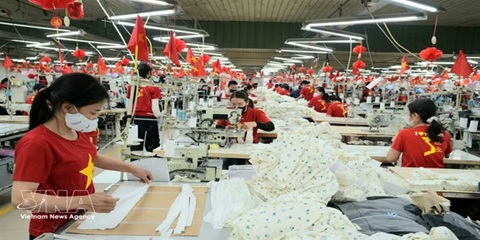
VIỆT NAM TARGETS $48 BILLION IN TEXTILE-GARMENT EXPORTS
Việt Nam’s textile and garment industry is facing both opportunities and challenges amid complex and unpredictable developments in the global market, prompting businesses to improve growth quality, optimise production costs and enhance adaptability in pursuit of an export turnover of about $48 billion this year. The target is considered an important milestone that requires concerted efforts from management agencies and the business community.
INFRASTRUCTURE / CONSTRUCTION / LOGISTIC / PORT
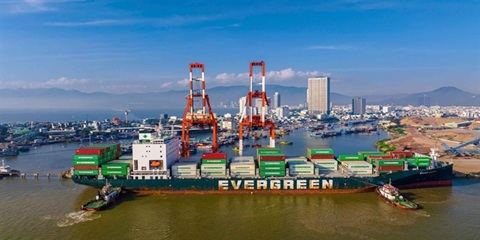
CUTTING LOGISTICS COSTS KEY TO BOOSTING EXPORTS
Reducing costs has become an increasingly urgent priority for import-export activities, particularly logistics costs, a conference in Hà Nội was told on Tuesday. According to Deputy General Director of the Ministry of Industry and Trade's Agency for Foreign Trade, Trần Thanh Hải, import-export activities has remained a bright spot for the economy in recent years, playing an important role and helping drive macroeconomic growth.
Events Sponsors






















